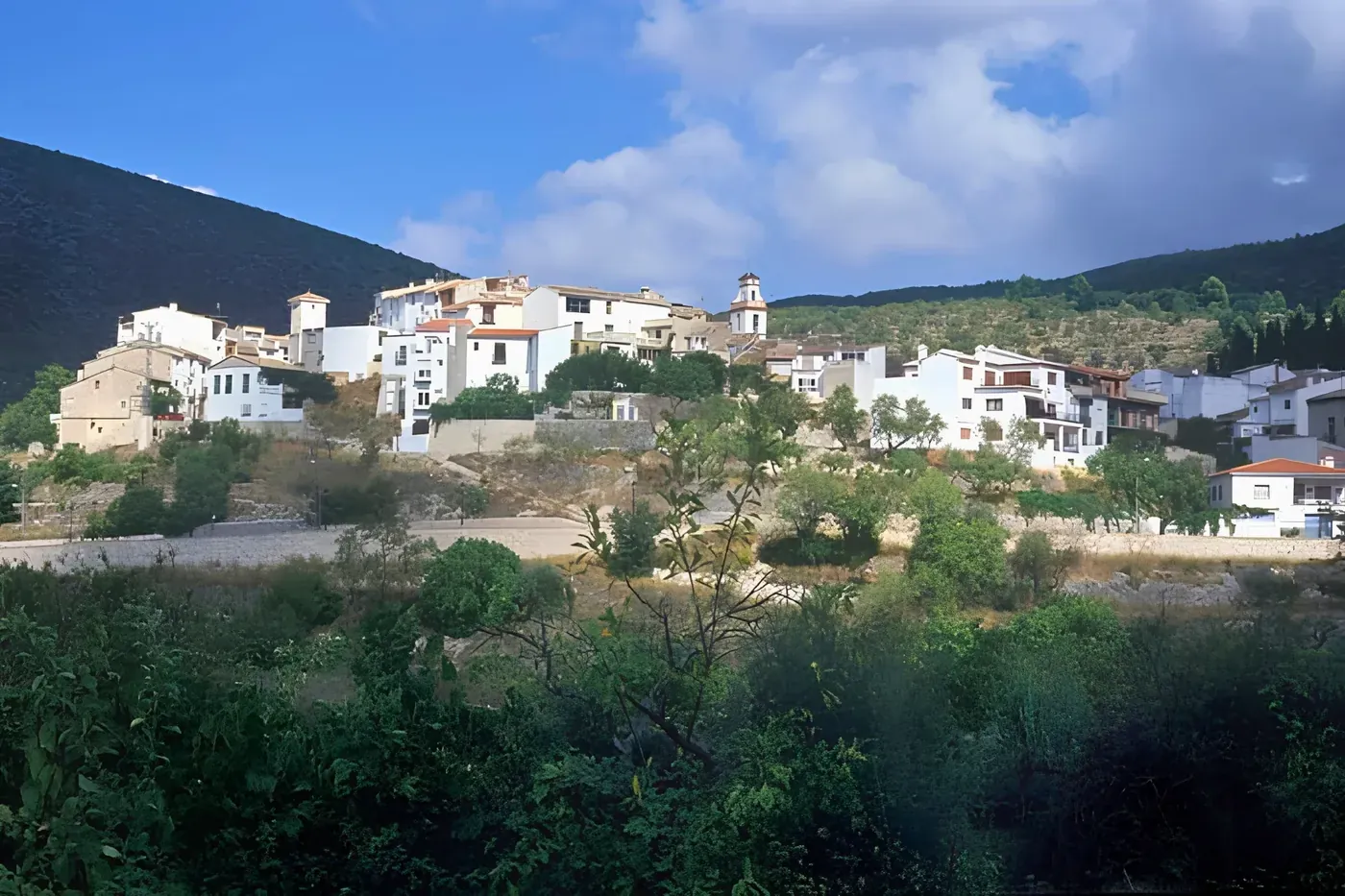
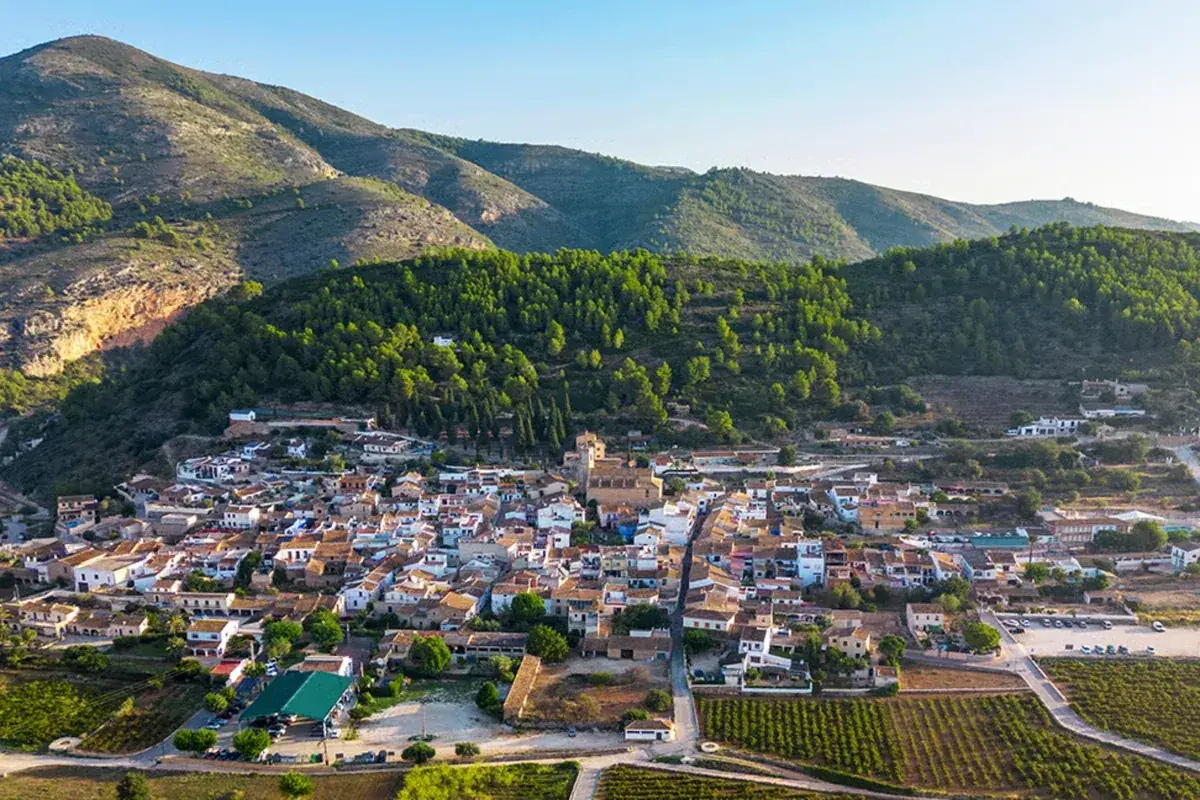
Castell de Castells on its hillside, the bell tower rising above the rooftops

Castell de Castells

A whitewashed mountain village beneath the ruins of an Arab castle, an hour or so inland from the Costa Blanca coast. A short guide to its history, its fiestas and its unhurried life.

Castell de Castells is a small mountain village of a few hundred people, folded into the mountain valleys of the Marina Alta and surrounded by the Serrella, Aixorta, Forat Negre and Alfaro ranges. It feels a long way from the beaches: a working village of almond, olive and carob terraces and quiet streets, where the bars on the square do the job the internet does everywhere else. The ruins of El Castellet sit high above the village on the Penya del Castellet, with sections of its walls and an old cistern still visible on the summit.
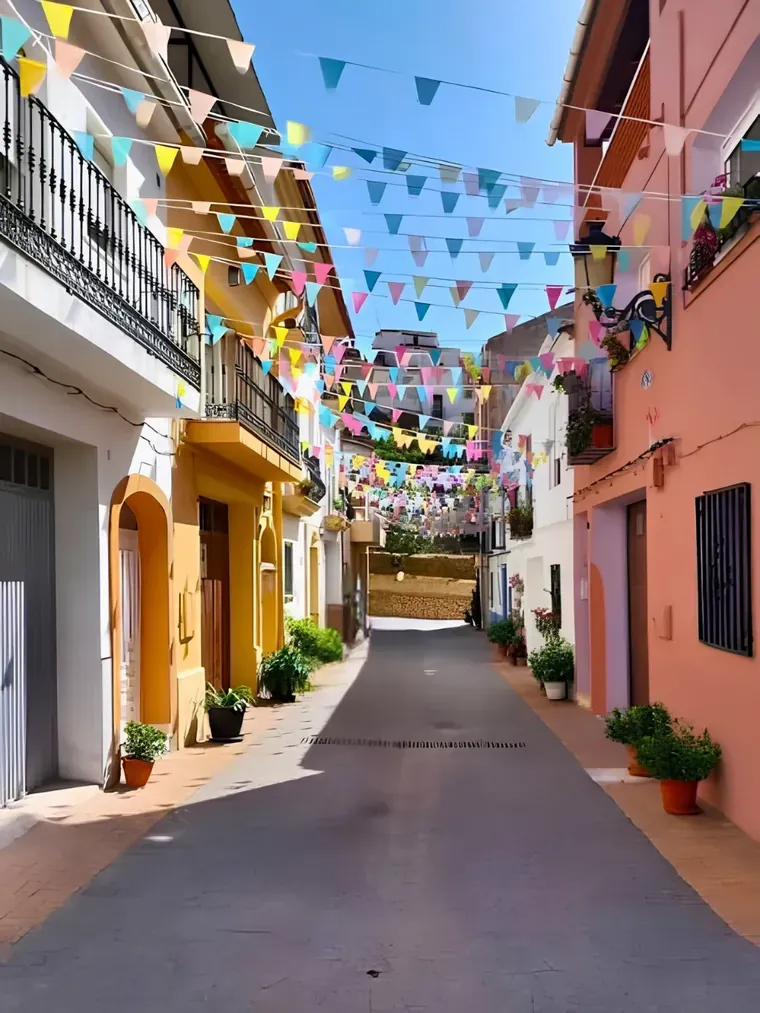
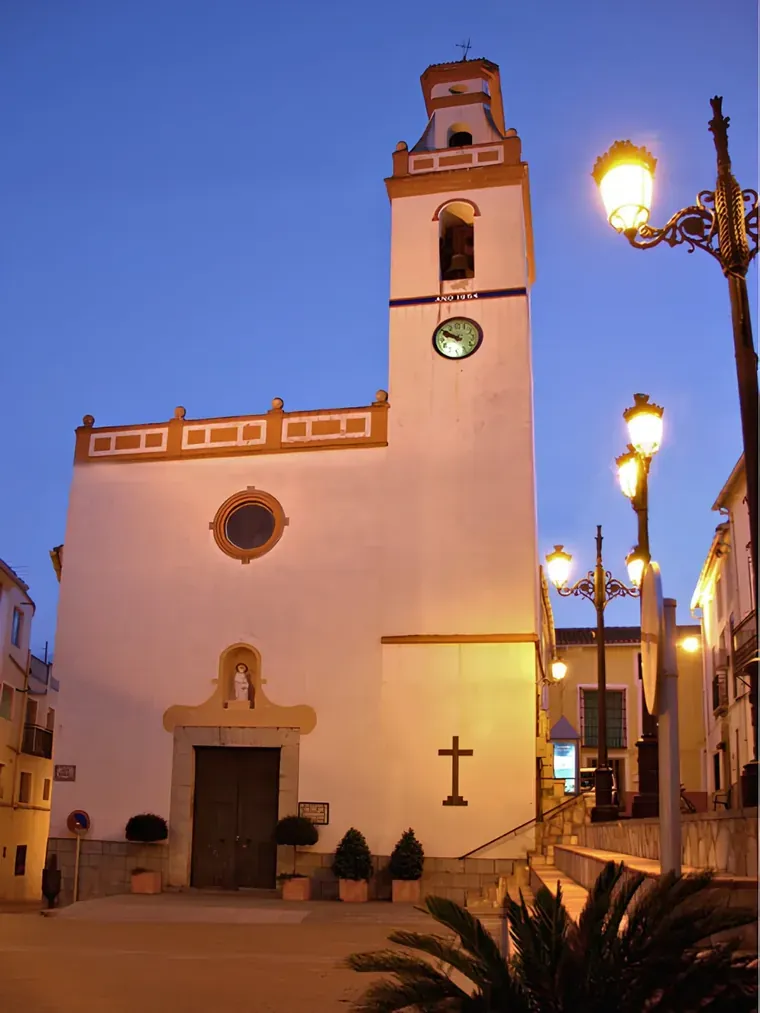
Fiesta bunting across a street in Castell de Castells The church of Castell de Castells at dusk

A short history, from the castle down

People have lived in these valleys for thousands of years. At Pla de Petracos, a short distance from the village, rock shelters preserve Neolithic paintings dating back roughly 7,000 to 8,000 years, part of the UNESCO World Heritage listing for the Rock Art of the Mediterranean Basin on the Iberian Peninsula.

The Islamic period left settlements across these valleys and the remains of the castle high above the village on the Penya del Castellet. After the Christian conquest, Castell de Castells passed to the Order of Calatrava, and following the expulsion of the Moriscos in 1609 the village was repopulated largely by families from Majorca. Agriculture remained central to life here, with almond, olive and carob cultivation shaping the landscape, and the Ethnological Museum in the village tells the story properly.

You can reach both the castle ruins and Pla de Petracos on foot, but neither is a casual stroll; our walking guide gives the routes, distances, gradients and times.
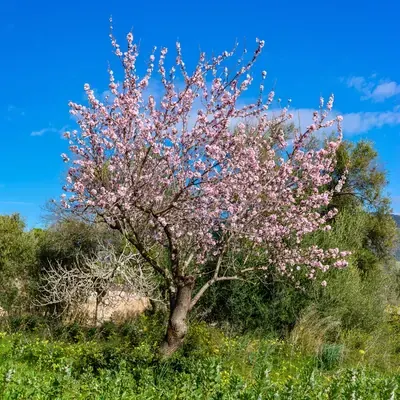
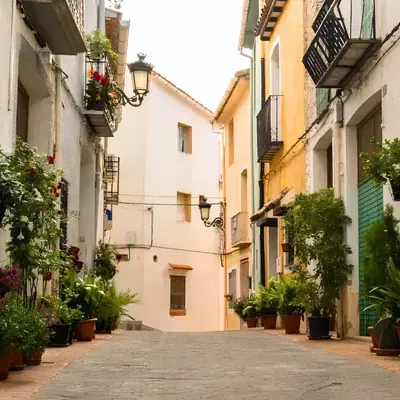
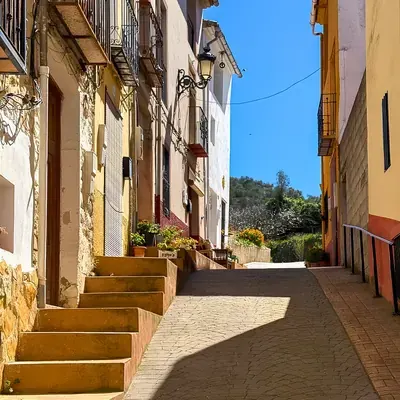
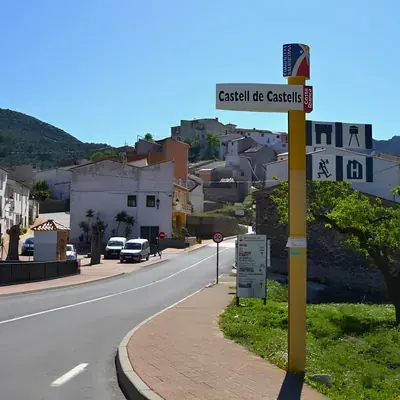
Almond tree in blossom near Castell de Castells A lane in Castell de Castells lined with plants A stepped street in Castell de Castells The Castell de Castells sign at the entrance to the village

Village life

This is a small, welcoming place: family-run shops, local food, a weekly market and plenty of quiet streets to wander, all surrounded by mountains. Mornings belong to the bakery run and the bar counters, evenings to the square. Nobody is in a hurry, which is precisely what people come for. It is the sort of place where a short visit can make the idea of staying a little longer seem very appealing.
The village year

Late winter

Almond blossom

The almond trees begin to flower, bringing colour to the valleys and photographers out among the mountain terraces.

Spring

Green valleys

Wildflowers, walking weather and the mountains at their best.

26 July

Santa Ana

The village celebrates its patron saint in late July, alongside its week of cultural events.

7–8 September

Fiestas de Petracos

An old local tradition brings people together at Pla de Petracos at the end of the almond harvest.

Autumn

The harvest

Almonds and olives come in, and the light turns golden.

Village time

Shops and bars here keep village hours, closing for lunch and shifting with the seasons. Build a little slack into your plans, order another coffee, and let the place set the pace. It's better at it than you are.

Made for walkers and riders

The village sits inside a network of waymarked trails, surrounded by the mountain roads and climbs that make the inland Costa Blanca popular with cyclists. Rather than repeat it all here: the routes, the climbs and the honest advice live in our walking guide and cycling guide.

Castell de Castells from above, mountains on every side

Stay in the middle of it

Casa Blanca is the village bar with three double rooms upstairs, on a quiet street in the middle of it all. Breakfast included, tapas downstairs, mountains in every direction.

Castell de Castells: common questions

Is Castell de Castells worth visiting?

If you like real mountain villages, genuinely yes: the ruins of a Arab castle above the rooftops, Neolithic rock art at Pla de Petracos, marked walking trails from the streets, the mountain roads that draw cyclists inland, and a proper village square. If you're after beach clubs, stay on the coast.

How do I get to Castell de Castells?

By car, allow around an hour or so from the coast at Calpe or Denia. The CV-752 climbs over the mountains from Tarbena; full directions are on our contact page.

When is the best time to visit?

Almond blossom in late winter, spring and autumn for the mountains, late July for the Santa Ana fiesta and the village's cultural week, and early September for the Fiestas de Petracos at the end of the almond harvest. Winter brings quieter trails and clear mountain light.

Where can I eat in Castell de Castells?

The village has a handful of bars around the square. Ours is Casa Blanca: tapas, simple plates, local wine and a terrace, with details on the bar and kitchen page.