
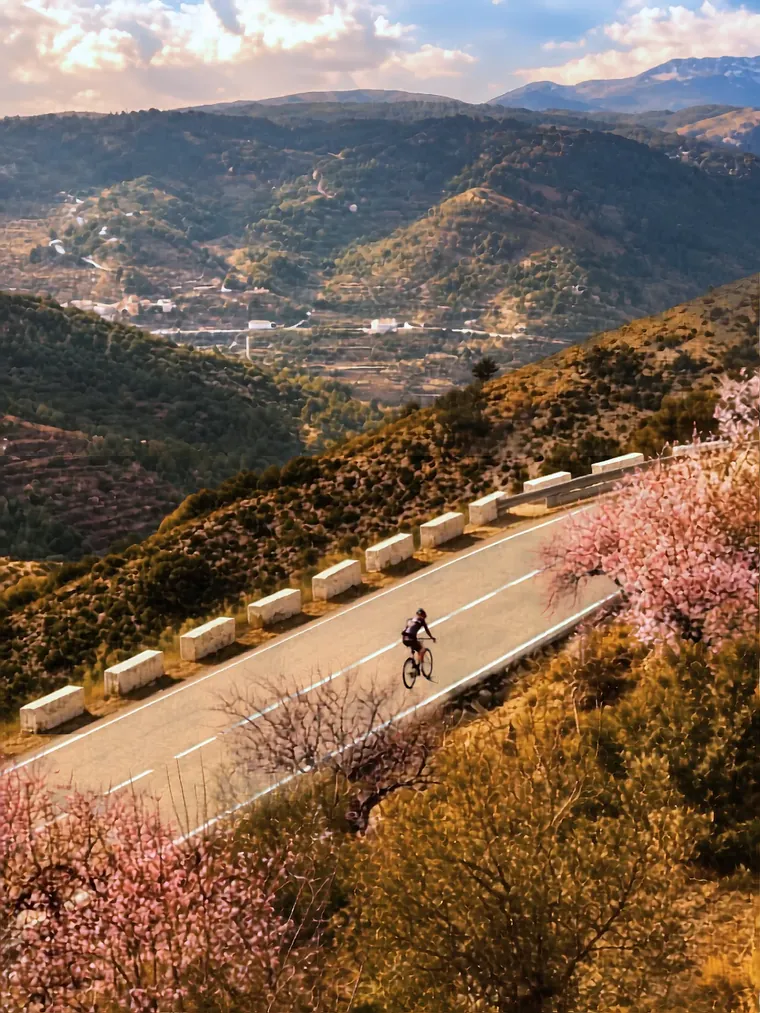
A cyclist climbing a quiet mountain road above the valley, almond blossom either side

Cycling in Castell de Castells & the Costa Blanca Mountains

The climbs the pros train on, all within reach of our front door: Coll de Rates, the Vall d'Ebo and Port de Tudons, with honest numbers and the loops we send riders on.

The Costa Blanca mountains are a favourite winter training ground for professional teams, and Castell de Castells sits right in the middle of the good part: high, quiet roads, honest climbs and villages with a bar at exactly the right moment. You don't ride out to the mountains from here; you wake up in them, in a village that has been working these terraces for centuries.

The classic climbs from Castell de Castells
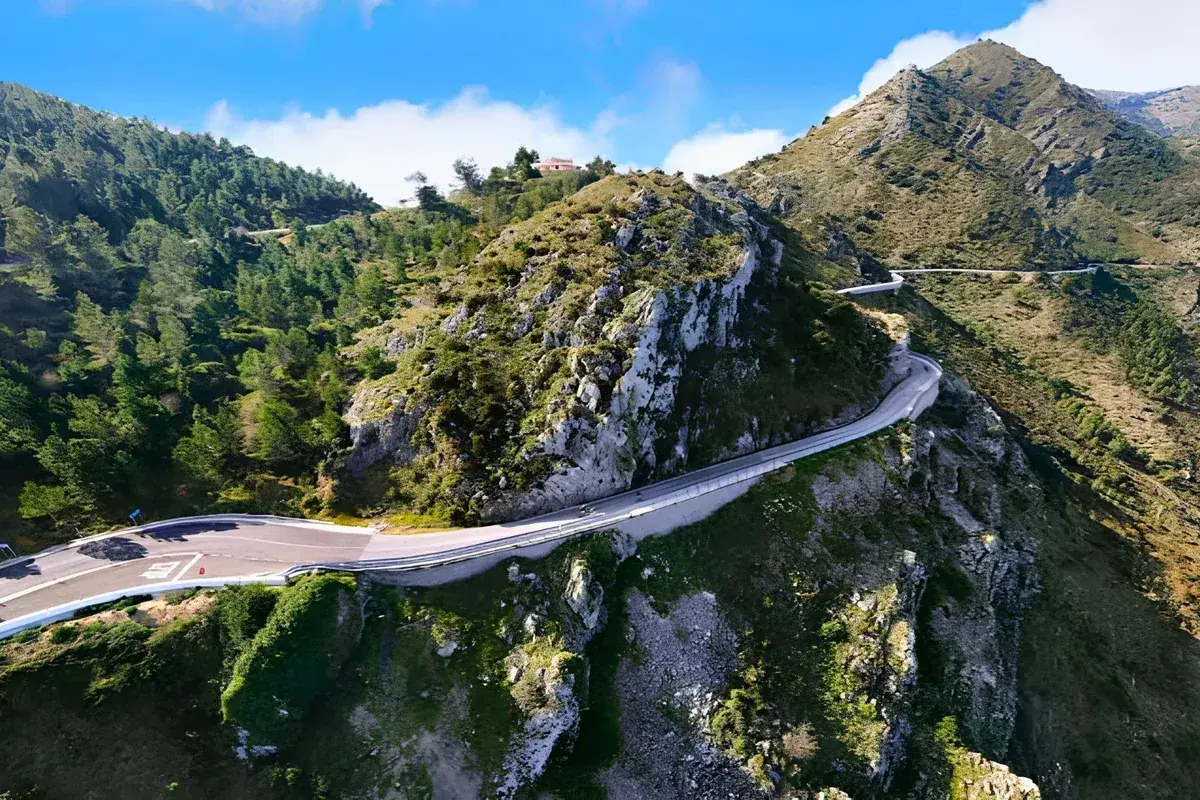
The hairpins of the Coll de Rates road curving along the ridge
The classic climb

Coll de Rates

6.5 km 351 m 5.4% avg Summit 627 m

The most famous climb on the Costa Blanca, where you'll see the pros doing their winter intervals. From Parcent it's a steady, beautifully surfaced 6.5 km with sweeping views north and a restaurant terrace at the top. It can also be approached from the Tarbena side, straight off our own road, for a longer, gentler way up.
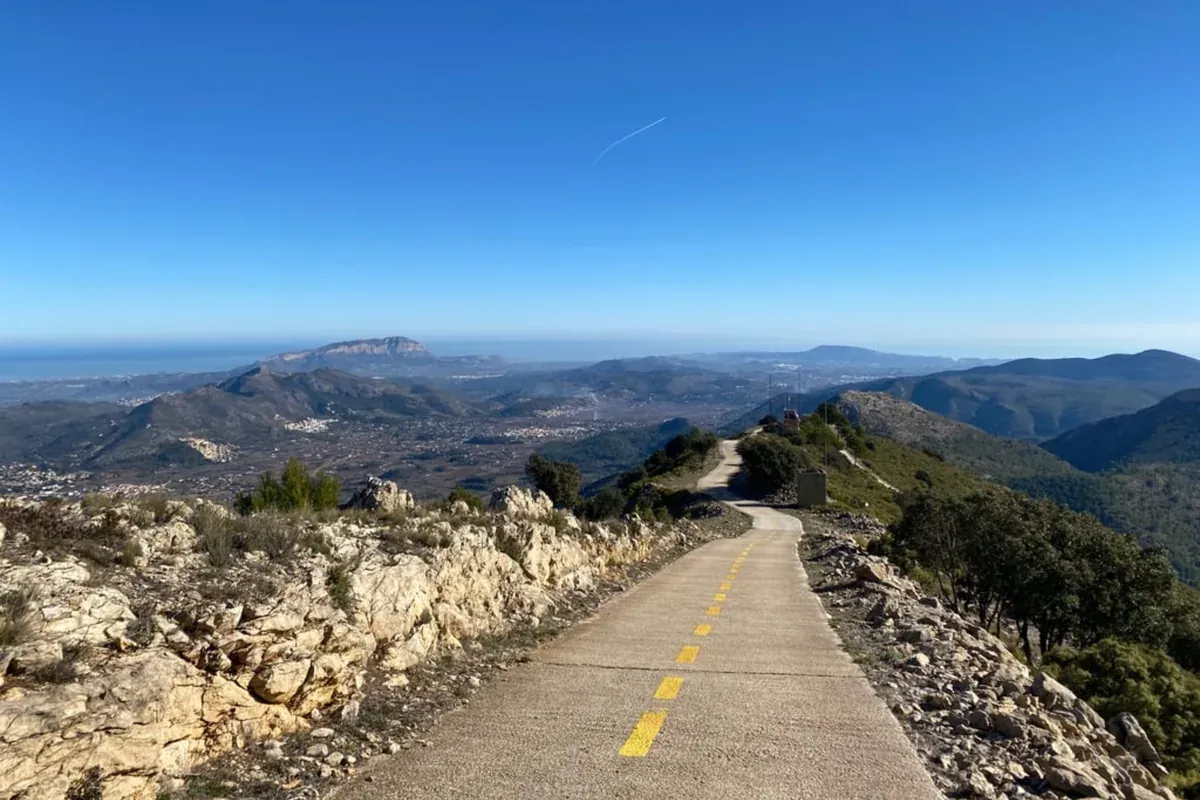
The narrow concrete road along the ridge to Tossal dels Diners
For the brave

Tossal dels Diners

+3 km Ramps to ~21% Summit 926 m

After the Coll, the optional extension to Tossal dels Diners adds roughly 3 km of much harder climbing, with ramps over 15% and a final section around 21%, plus a short unpaved stretch before the concrete road. It is a different proposition altogether, and very much optional. The full Parcent ascent works out at about 9.8 km at 6.6%.
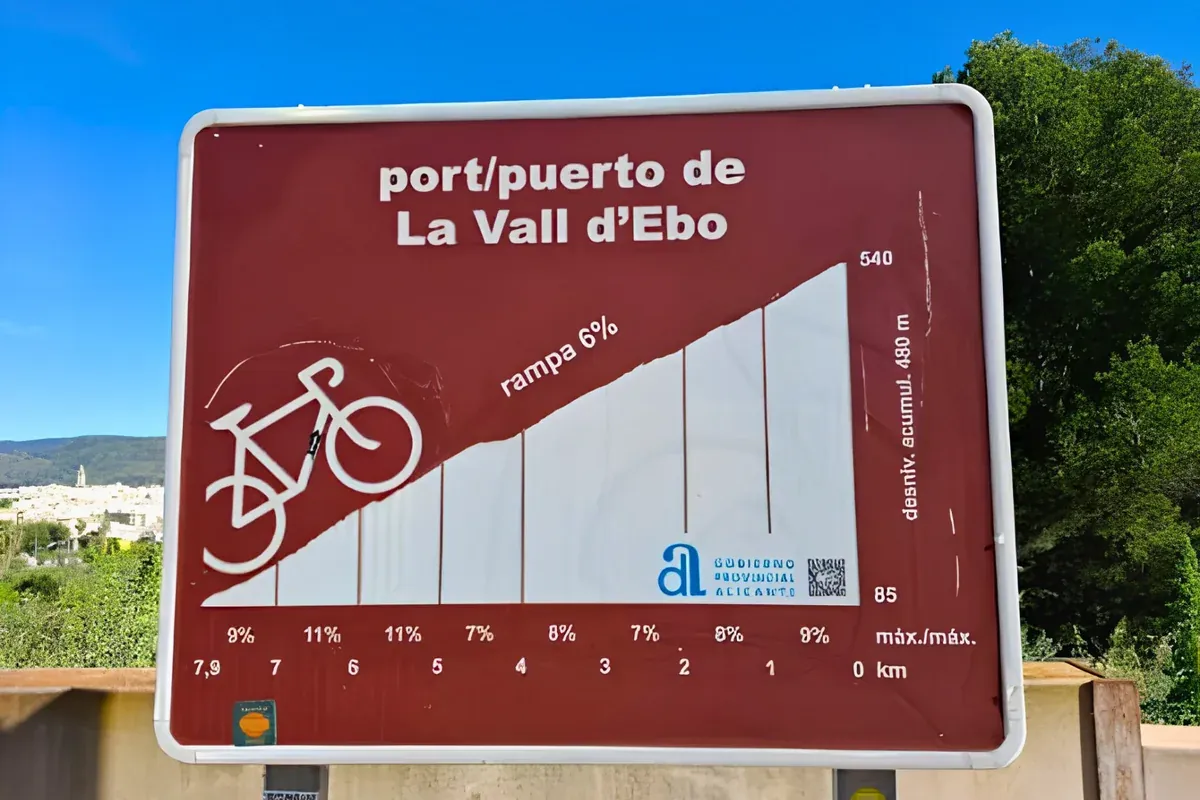
The Port de la Vall d'Ebo climb sign with its gradient profile
A rider's favourite

Port de la Vall d'Ebo

8 km ~425 m 5–6% avg Summit 540 m

Many riders' favourite climb in the region: ten hairpins, barely any traffic, kilometre boards with the gradients on them, and views that keep improving. The steepest work comes in the first two kilometres, there's a merciful flat shelf halfway, and the high valley beyond the top is glorious, empty riding.
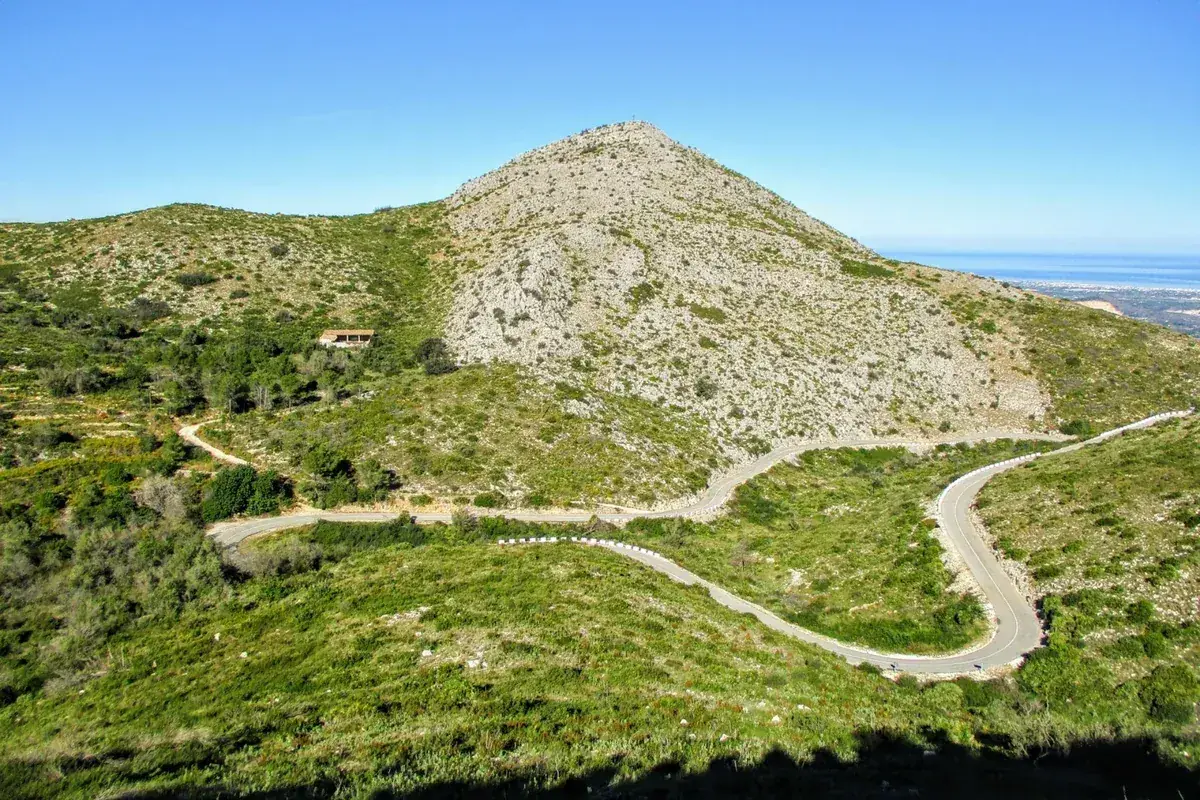
The road winding up towards Port de Tudons through the pines
A big mountain day

Port de Tudons

~12 km ~600 m ~5.2–5.3% avg Summit 1,024 m

The highest paved mountain pass in Alicante, and the big one for a proper day in the Aitana mountains: seventeen hairpins up from Sella with gradient boards every kilometre. It is a long, steady climb rather than a wall, but there are ramps around 10% and above. Fold it into a big day through Guadalest and Confrides and you've earned whatever you order at the bar that evening.

Road surfaces on the main climbing roads are generally very good, and traffic in these inland valleys is light in a way coastal riders don't quite believe until they arrive. Gradients are honest rather than brutal. For most riders, a sensible climbing gear is worth having: the main passes are steady rather than savage, but the Tossal dels Diners extension is another matter entirely.

Rides from Casa Blanca

These loops link the best-known roads of the region straight from the village. Distances are honest approximations; the area is well mapped on Komoot and Wikiloc for planning your exact route.
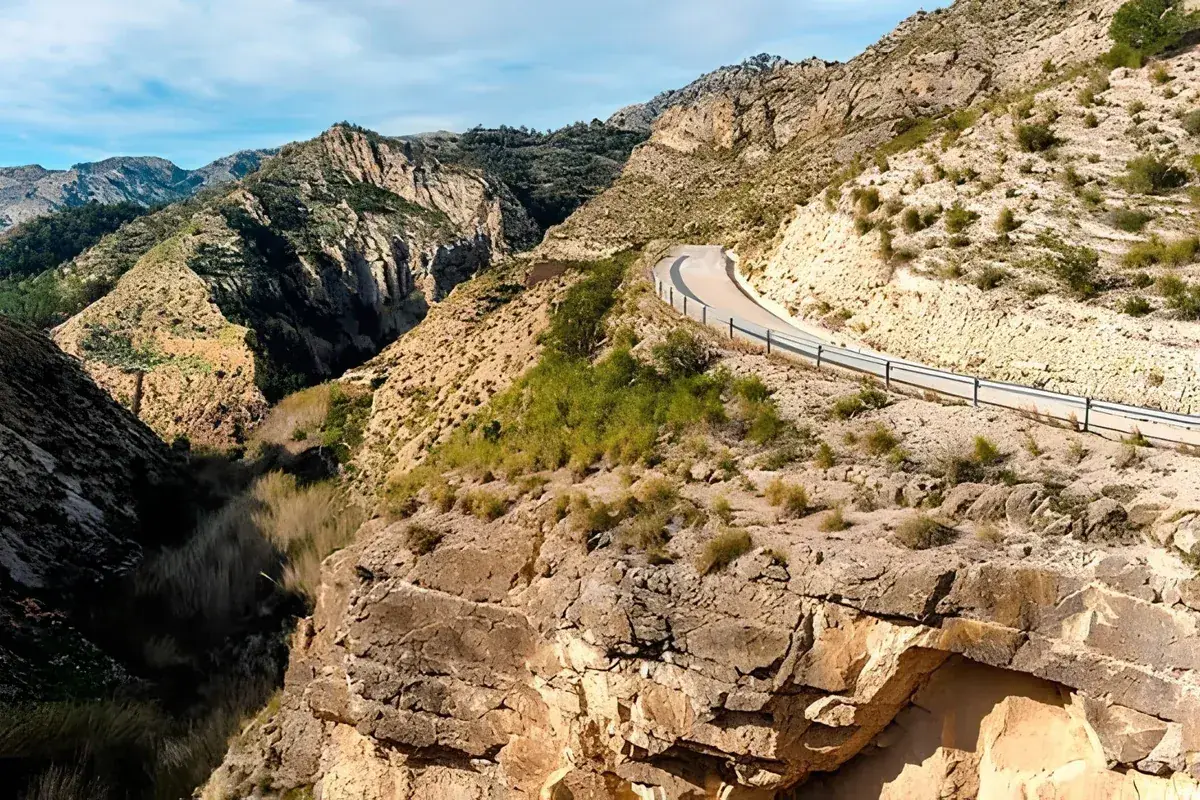
The road cut into the gorge on the way home over Tarbena
The classic loop

1. The Rates loop

~45 km ~900 m 2.5–3 hrs

Down the Vall de Pop to Parcent, up the classic side of the Coll de Rates, then home over Tarbena on the CV-752, one of the quietest, prettiest roads in the region. Coffee stop in Parcent, views the whole way back.
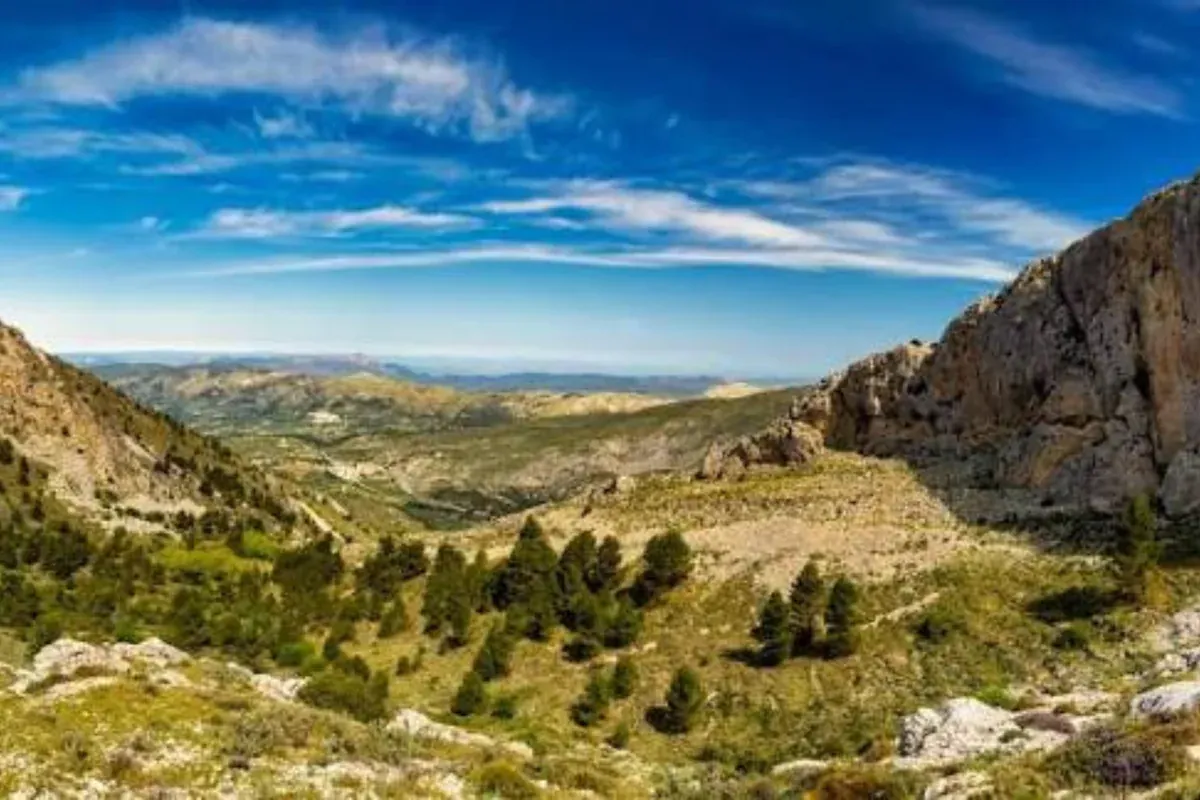
Looking across the high valleys towards the coast
A big day

2. The two-valleys day

~70 km ~1,300 m 4–5 hrs

Out through the Vall de Pop and around to the Vall d'Ebo climb, over the top into the high valley, then back through the empty lanes towards home. Refill water in Vall d'Ebo village; there isn't much else up there, which is exactly the point.
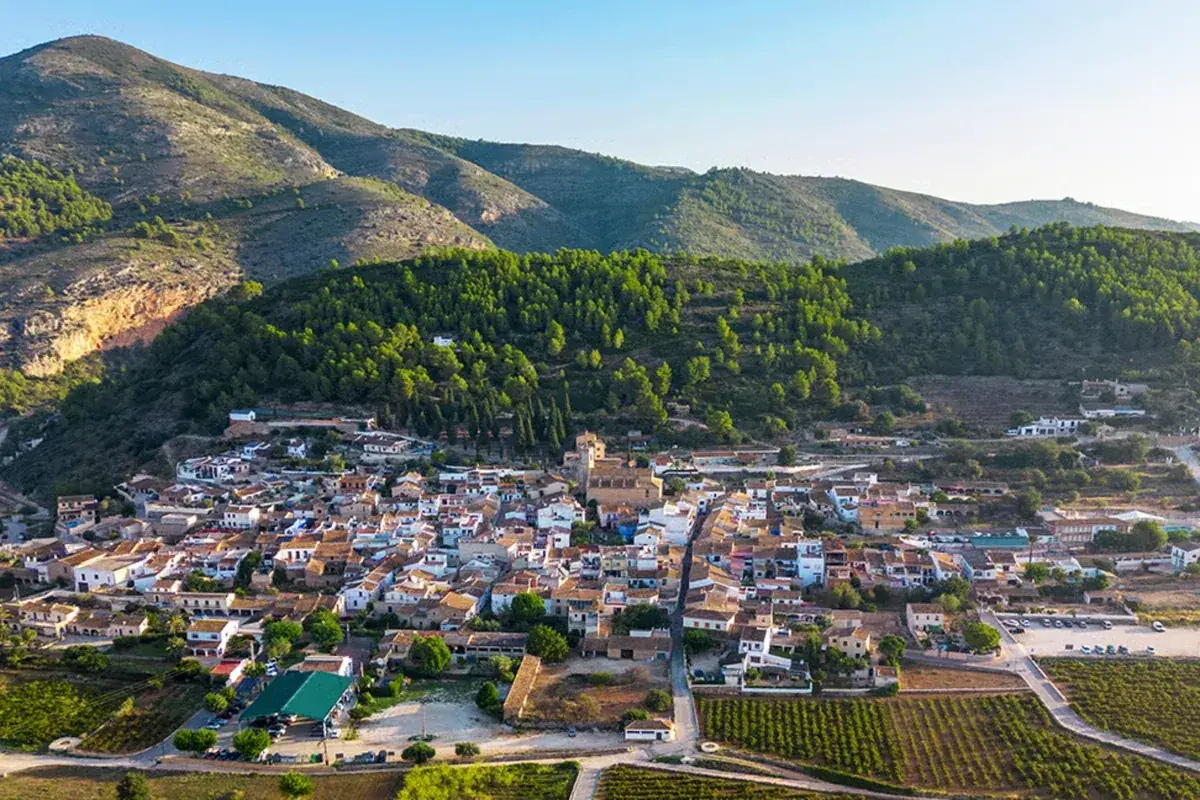
Castell de Castells from above, mountains behind
An easy day, quiet roads

3. The Vall de Seta villages

~30 km ~600 m Recovery day

West from the door through Famorca, Facheca and Tollos, tiny stone villages strung along the valley beneath the Serrella. Almost no cars, no famous climbs, just constantly rolling mountain road. Lovely in almond blossom season.
Gravel and mountain biking

There are plenty of MTB and gravel possibilities around the village, including established BTT routes published by the local council, but surfaces and conditions vary through the year. Surfaces change with the seasons, so check recent activity on Wikiloc or Komoot before committing to a big off-road day.

When to ride here

Winter is the professional season for a reason: mild days, empty roads and mountain light you don't forget, with our heating waiting at the end of it. Spring brings the almond blossom and green valleys; autumn brings settled, clear riding weather. Summer is doable with alpine rules: dawn starts, double water, and the climbing finished before midday.

If I had three days here

Day one

Get your legs under you

The Vall de Seta villages, coffee in the square, early night.

Day two

The classic

Coll de Rates, and Tossal dels Diners if you're feeling brave, with lunch on the terrace at the top.

Day three

The big one

Tudons, Sella, Confrides and home past Guadalest. Then dinner downstairs, and you'll sleep like the mountains do.

Janette's rule: fill the bottles

Don't assume the next village will have an open cafe or shop. Fill up whenever you get the chance, particularly outside the main season. In July and August, I wouldn't start a mountain ride without plenty of water and a dawn alarm.

Cycling at Casa Blanca

The practical side, because it matters as much as the gradients.

  • Secure overnight bike storage, ask when you book
  • Breakfast included before you roll out
  • Packed lunches made to order
  • Free Wi-Fi for planning tomorrow's ride
  • Bar and kitchen for the after-ride cerveza and plate
  • Heating in winter, pool in summer, quiet rooms always
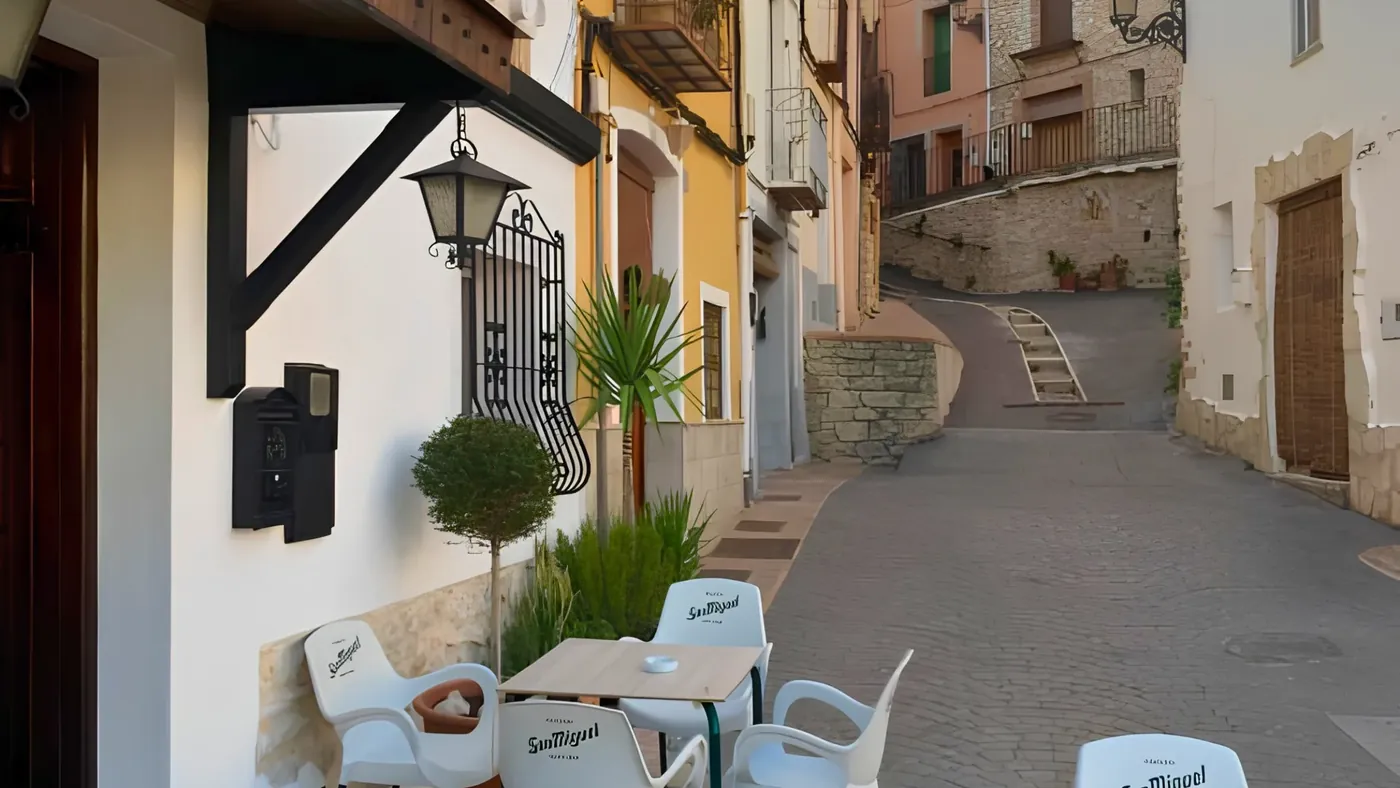
The village street outside Casa Blanca, terrace chairs waiting in the evening light

After the ride

Back at the village, this is where we come in. Casa Blanca is a Spanish bar and kitchen as well as a place to stay: cold cerveza, a properly made gin and tonic, tapas and honest plates, live sport on the screen when it matters. Three quiet double rooms upstairs, breakfast included, and a landlady who knows which roads are worth your morning.

Cycling in Castell de Castells: common questions

Is Castell de Castells good for road cycling?

It's in the heart of the Costa Blanca's training country. The Coll de Rates, Vall d'Ebo and Port de Tudons climbs all fit into rides from the village, the inland roads are quiet, and surfaces on the main climbing roads are generally very good.

What are the best cycling climbs near Castell de Castells?

The Coll de Rates from Parcent (6.5 km at 5.4%) is the regional classic, the Port de la Vall d'Ebo (8 km at 5–6%) is many riders' favourite, and the Port de Tudons from Sella (about 12 km to the highest paved pass in Alicante at 1,024 m) is the big one.

When is the best season for cycling on the Costa Blanca?

October to May is the sweet spot, and winter is when the professional teams are here: mild, clear days and quiet roads. Summer riding means early starts and plenty of water.

Can I bring my bike to Casa Blanca?

Yes, riders are very much our crowd, and there's somewhere safe for the bikes overnight. Mention it when you book.

Is the area suitable for mountain biking or gravel?

There are plenty of MTB and gravel possibilities around the village, including established BTT routes, but conditions vary by season. Ask us for an honest read on the current tracks before planning a big off-road day.

Where can I eat after a ride?

At ours. The bar and kitchen at Casa Blanca serve everyone, not just guests: tapas, burgers, salads, cold drinks and a decent coffee before you roll out in the morning.